

Given how rapidly technology and both AI and AI-adjacent companies are evolving, I knew it was time for another trip to Asia. After meeting with 36 companies across six cities in China and Taiwan spanning the tech supply chain – from semiconductor equipment and components to PCs, smartphones, servers and power – it became very apparent that China is shrinking tech moats across the AI stack – and fast. As we had previously observed during another trip to China, this shift is happening particularly quickly in LLMs and memory chips. AI demand remains exceptionally strong, consumer devices are working through a difficult memory cycle, and investors are increasingly asking how long the current capex boom can last.

AI demand may be exceptionally strong today, but in semis, new capacity typically arrives just as demand cools, and that mismatch creates inventory gluts, especially in commoditized markets like memory. With China now adding competitive memory supply, global incumbents (including South Korean players) face a greater risk of oversupply and pricing pressure.
Key themes from the trip:
- The next wave of chip supply is Chinese
- Devices: past peak memory headwinds
- Edge AI, robotics, and power are preferred themes
The Next Wave of Chip Supply is Chinese
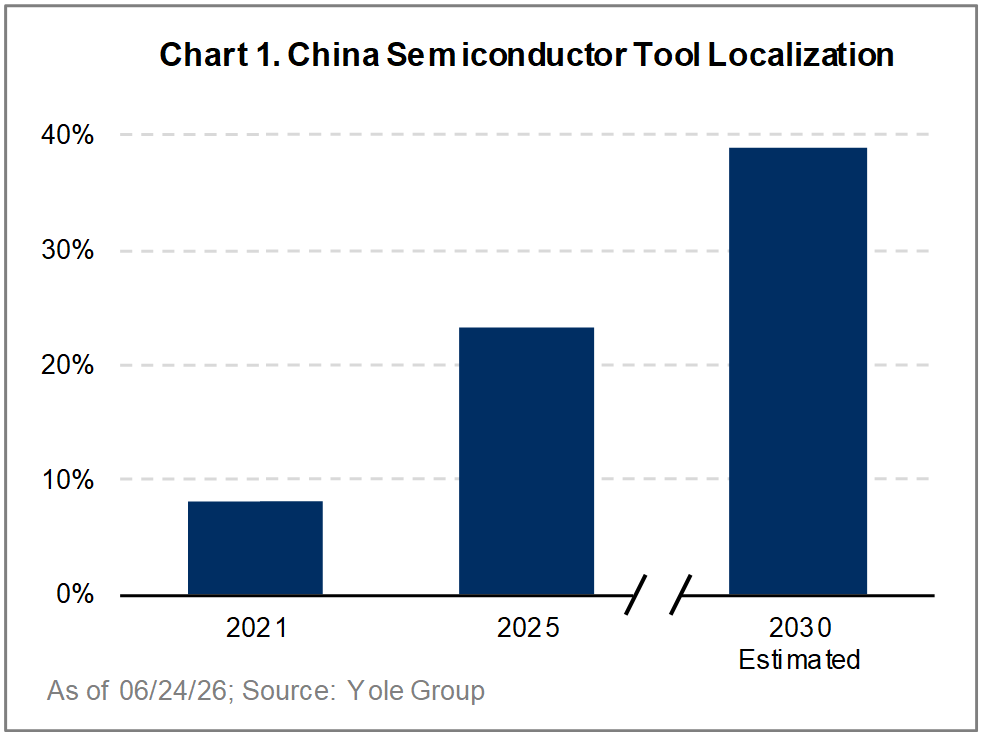
Our 2Q letter described Chinese competition as an emerging threat rather than a tail risk, and this trip gave clear evidence for that view. Localization is well underway, with an industry target of 80% self-sufficiency by 2030.1 Tool localization is just under 25% in logic chips (Chart 1), but the management team at one of China’s largest domestic semiconductor equipment manufacturers noted localization is above 50% in memory, with lithography the only major bottleneck. Most surprisingly, during another meeting with a partially state-owned Chinese manufacturer, we learned that some Chinese semiconductor capital equipment is already being exported to TSMC, at prices roughly 20–30% below incumbent suppliers. The pattern is a familiar one, which we have seen in many other sectors; it begins as China-for-China, and then the exports follow. Chinese memory makers are closing the gap on bit density,2 but yields3 still lag, meaning fewer usable chips per wafer. As yields improve, output will rise even without new fabs.
The Worst Impact of Memory Pricing May Be Behind Us
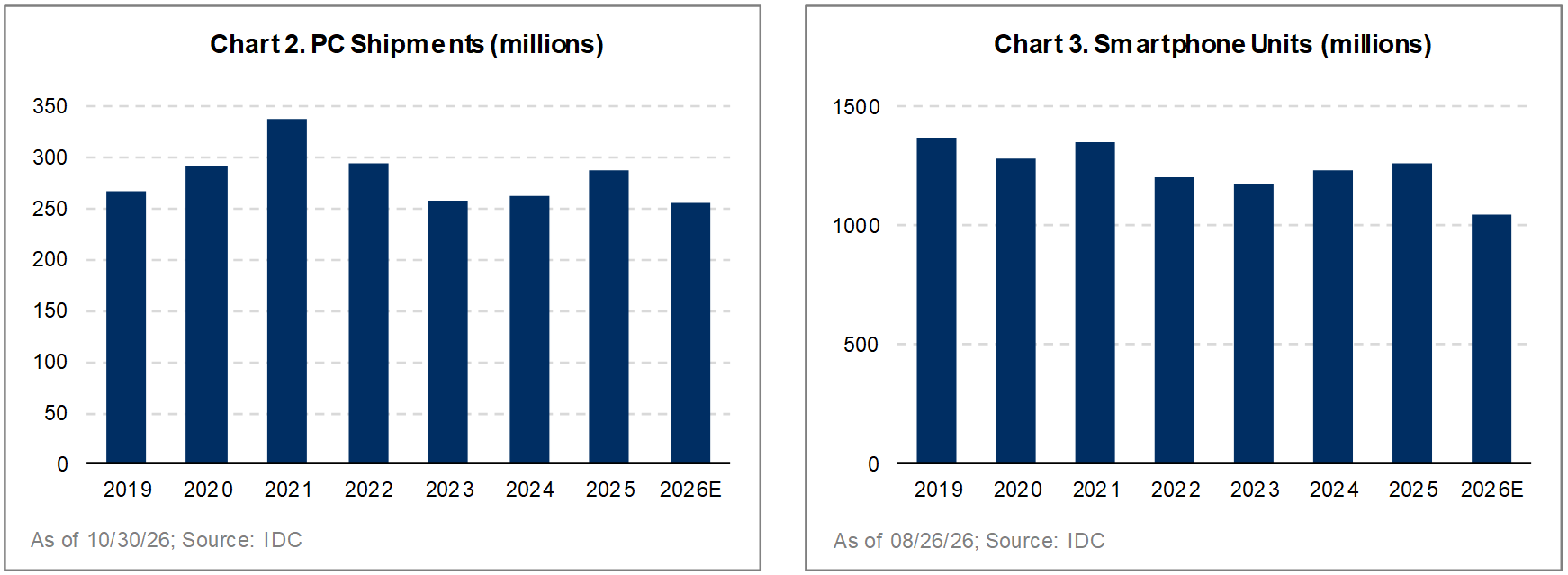
Smartphone and PC makers are cautiously optimistic that the worst of the memory cost squeeze is behind them. Brands have been raising prices and pushing premium devices, yet IDC4 still expects total 2026 units to fall 11% year-over-year for PCs and 17% for smartphones (Charts 2 & 3). The base case for next year is fairly flat for PC units.
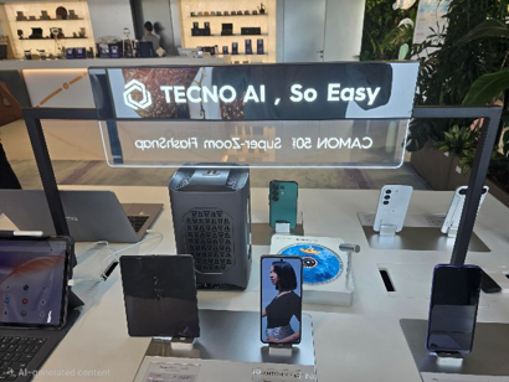
At Altrinsic, our focus on durable, high-quality business models that have withstood multiple shocks leaves the Emerging Markets Opportunities portfolio5 well positioned for this environment. Brands with the strongest supply chains, such as Lenovo, are best placed to take share from smaller rivals that are struggling to secure memory. Others, like Shenzhen Transsion, are using the shortage to move upmarket, protecting margins and profit growth as volumes decline.
Edge AI, Robotics, and Power are Durable and Emerging Themes
Almost every AI supply chain company we met said demand is running well ahead of supply, with persistent shortages and price increases. Attention is shifting toward the macro backdrop – rate increases, hyperscaler balance sheets, and whether free cash flow can fund further capex growth beyond next year.
We favor themes that are either emerging or durable through any AI investment ‘air pocket’:
1. Edge AI – running AI models on local devices (‘the edge’) close to where the data is generated rather than in a data center offers privacy, lower latency, and lower connectivity costs. PCs and smartphones are the obvious candidates; industrial PCs and sensors, less so.
We first wrote about Advantech following our 2025 trip to Taiwan as a company to watch for ‘off the beaten AI path’. Advantech, the world’s largest industrial PC company, has a durable competitive advantage with a breadth of products that can be leveraged across multiple end markets. Those end markets now include solutions for data center customers, a cornerstone of this year’s stellar growth and share outperformance.
2. Robotics – Building on our colleagues Alice Popescu and River He’s trip to China earlier this year, I observed that robotics themes are still relatively early-stage, particularly in humanoids, but the structural winners are taking shape on two tracks:
China is scaling at home. As the global leader in robot installations,6 China has the factory floors and the hardware scale to collect real-world training data faster than anyone else. In robotics, as in LLMs, more data means better models. Further, the 15th Five-Year Plan7 puts smart manufacturing and self-reliance in core components at the center of industrial strategy. Airtac, China’s #2 pneumatics provider, is taking share from Japanese and German incumbents with its direct sales model and TAM expansion into adjacent markets such as linear drives.
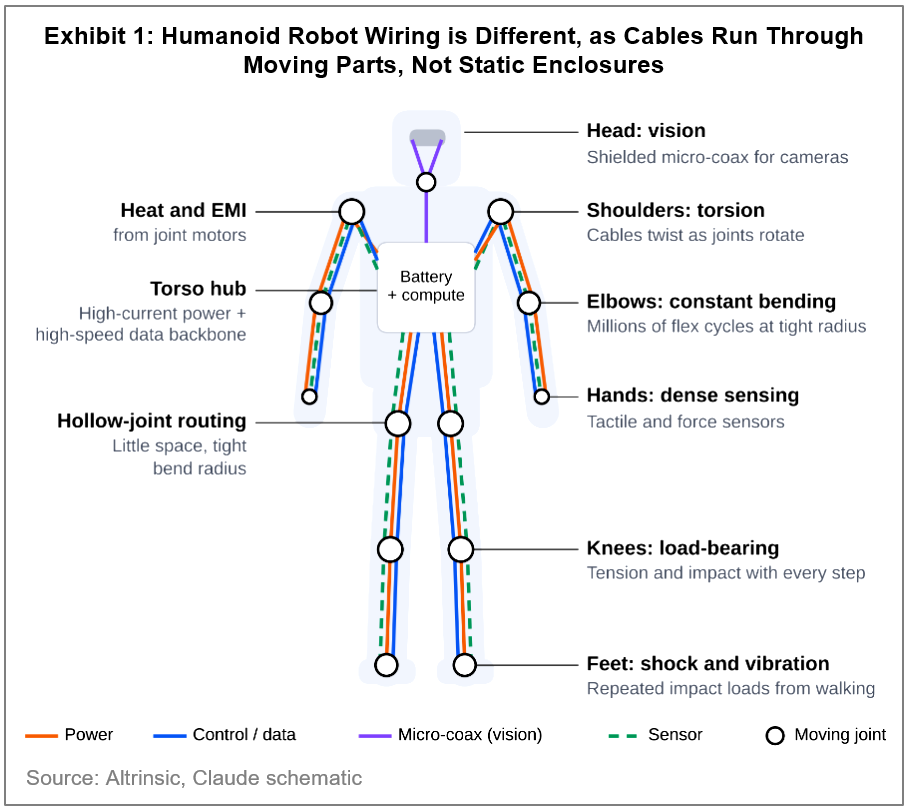
Components are a global race. Chinese suppliers dominate the humanoid robot supply chain, but Taiwanese suppliers are also winning share in US programs. Humanoid robots are dynamic systems in constant motion, often bearing loads and facing multiple physical stresses at once. Their cabling must be designed differently from general electronics (Exhibit 1). Sinbon, a leading specialty cable and connectors vendor based in Taiwan, is engaged in several US humanoid robotics projects that are gradually entering mass production this year. It has supplied industrial robotics solutions to customers such as Amazon since 2014.
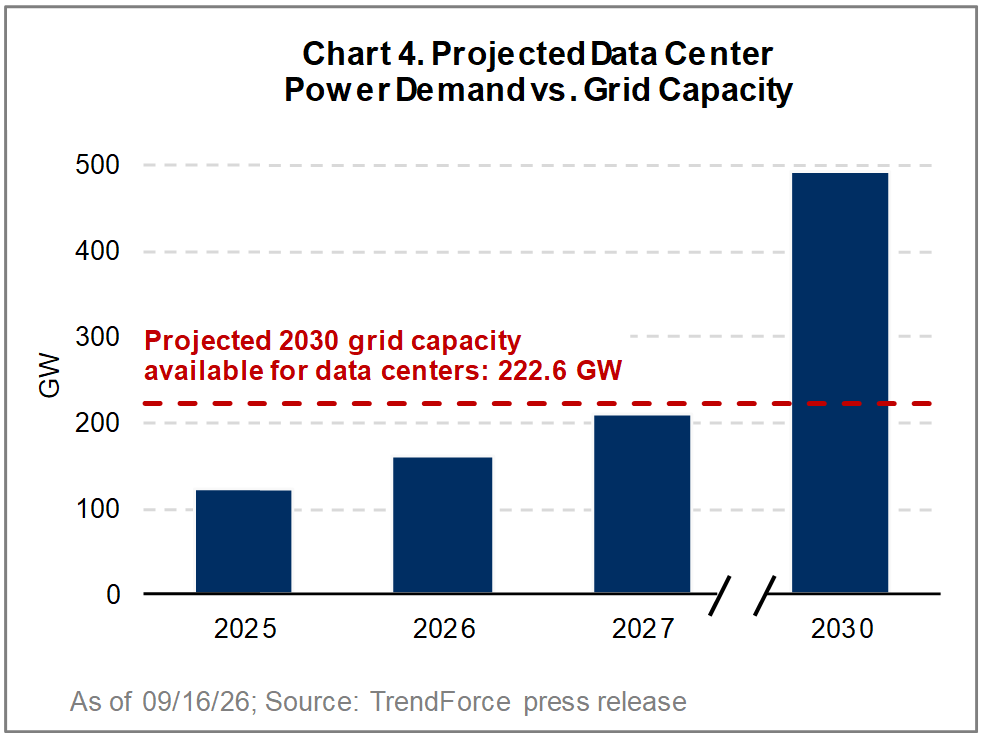
3. Power Supply – Data centers are short of power. TrendForce estimates8 the 2030 global power supply-demand gap at 268GW (Chart 4). Closing it will require an aggressive ramp-up of behind-the-meter solutions and ongoing architectural efficiencies, such as moving to an 800V HVDC (high-voltage direct current) architecture. Voltronic, a Taiwanese industrial power electronics maker, makes commercial-grade solar inverters and has recently launched power equipment for 800V HVDC solutions.
Closing Thoughts – The Supply Side of the AI Story
The image I keep reflecting on from this trip is not a product launch or a chart, but rather a line of dump trucks idling outside of an industrial park in Shanghai close to SMIC’s fabs.9 It serves as a reminder of the enormous supply chain capacity China is building. In a few months, the trucks will disappear, and the buildings will be up and running. The question for investors is where all that supply goes next.
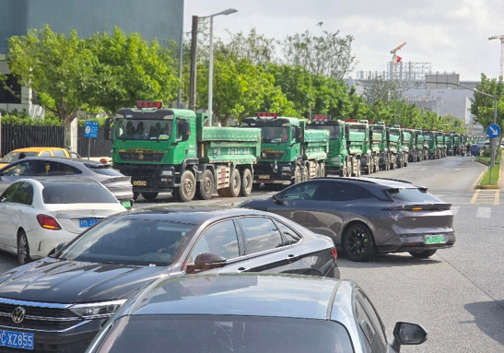
Fifteen years ago, China was described as ‘running a Red Queen race,’ working flat out to keep pace with Western technology.10 Today it sets the pace, and incumbent suppliers may find themselves running quickly just to stay in place. The pattern my colleagues saw in robotics and EVs is now extending to semiconductors. While Taiwan (and, to a lesser extent, South Korea) gets the deserved credit for being the global center of the world’s AI supply chain, China’s role remains underappreciated. The narrative that China is closing the technology gap with the West misses the bigger point: China is set to be a significant force on the supply side of the equation. The trucks outside Shanghai will eventually depart, but the capacity they leave behind will persist. Investors have focused on how big AI demand can get. We believe the supply story is less appreciated, and it may matter just as much.